

Imagine this: You're Zara. Corporate babe. Lekki apartment. Aesthetic obsession.
You wake up, clean your space, spray your "luxury linen" home spray, and feel like your life is together.
You leave for work. By the time you're back at 7 PM, a thin layer of dust has settled on everything.
So you spray again. And again. By the end of the week, you've gone through two bottles. Your apartment smells "clean," but your throat feels scratchy. You've been coughing more than usual.
And you're wondering: Is this normal?
Omo, let me tell you the truth. That "long-lasting freshness" you're spraying? It's not just fragrance. It's alcohol. It's aerosol chemicals. It's harsh solvents designed to evaporate fast — and take your indoor air quality with them.
Before you tell me "but it's just home spray," let me break down what you're actually inhaling.

Here's what's in most ₦8,000–₦12,000 supermarket sprays:
1. High Alcohol Content (50–70%)
Evaporates fast — that's why the scent disappears in 2 hours. But it releases VOCs (Volatile Organic Compounds) into your air. VOCs irritate your lungs, trigger asthma, and cause headaches.
2. Aerosol Propellants
Pressurized spray cans contain butane and propane. You're literally spraying flammable gas into your living room.
3. Synthetic Fragrance Chemicals
Most cheap sprays use synthetic blends that aren't IFRA-approved. No regulation. No safety testing.
4. Phthalates
Chemicals that help scent "stick." The problem? They're hormone disruptors linked to respiratory irritation.
You're not just "freshening" your home. You're coating your lungs in chemicals that were never meant to be inhaled daily.
Why This Matters More in Lagos
Lagos air quality is already compromised. Dust, traffic fumes, generator exhaust.
Now add this: You close your windows to keep dust out. Turn on the AC. And spray chemical-heavy home spray to "freshen" the sealed space.
You've created a closed-loop system where those VOCs and aerosols have nowhere to go except your lungs.
Your home is supposed to be your sanctuary. But if your "fresh" air is full of chemicals, your lungs never get a break.
The Alcohol-Free Alternative
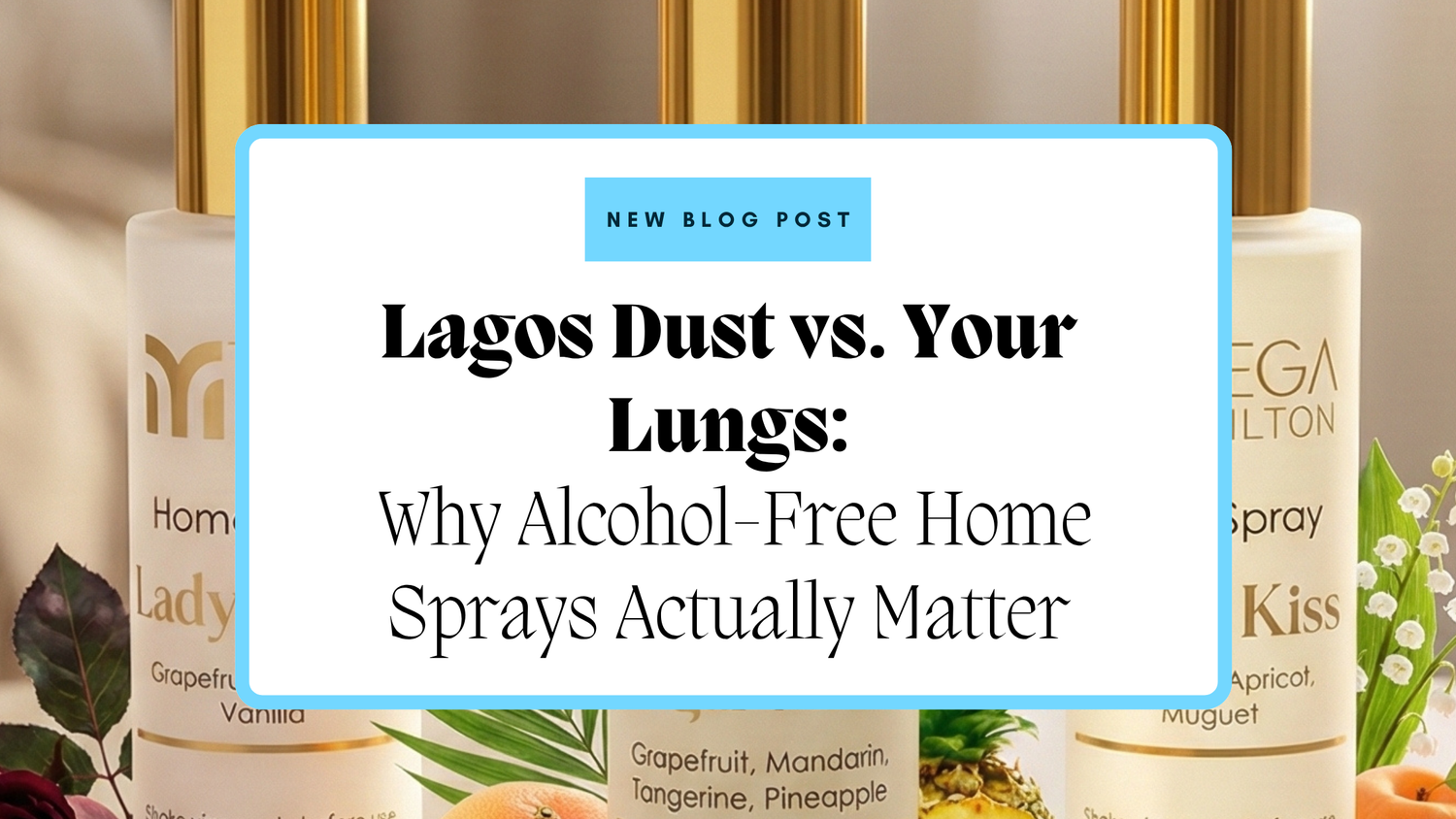
This is why I switched to Tega Milton home sprays.
Here's what makes them different:
✅ Alcohol-free formulation — No harsh VOCs
✅ IFRA-approved fragrance oils — Internationally certified as safe
✅ Water-based/oil-based blend — Fabric-safe and lung-friendly
✅ No aerosol propellants — Simple pump spray (no butane, no flammable gas)
✅ Lasts 24 hours on fabrics — Spray once, not five times
When I spray Baecation or Elysian on my curtains, I'm not just scenting my space. I'm protecting my air quality.
How to Know If Your Spray Is Safe
Check for these red flags:
❌ Aerosol can — Contains propellants
❌ High alcohol content — VOC bomb
❌ No IFRA certification — Fragrance isn't regulated
❌ "Flammable" warning — Ask yourself why you're spraying it indoors
❌ Strong chemical smell — That's exactly what it is
What I Use
1. Baecation – The Morning Reset
Tropical, breezy. I spray this on my living room curtains every morning.
2. Elysian – The Evening Wind-Down
Creamy vanilla and passionfruit. I spray this on my bedroom linens.
3. Sugar Mama – The Guest-Ready Spray
Bright, citrusy, clean. One spray before guests arrive.
All three? Alcohol-free. IFRA-approved. Fabric-safe. Lung-friendly.
Because if your "fresh air" is making you cough, is it even fresh?

Your Health > Your Budget
Supermarket spray:
₦8,000 × 2 bottles/month = ₦192,000/year
+ potential health costs (asthma medication, respiratory issues)
Tega Milton spray:
₦18,000 per bottle (lasts 2–3 months)
₦90,000/year
+ zero respiratory side effects
You're not spending more. You're spending smarter.
The Bottom Line
Lagos dust is unavoidable. Traffic fumes are unavoidable.
But what you spray inside your home? That's 100% in your control.
Stop coating your lungs in alcohol and aerosols just to make your space "smell nice."
Invest in home sprays that are designed for safety.
Because if your sanctuary is making you sick, is it even a sanctuary?
0 comments