

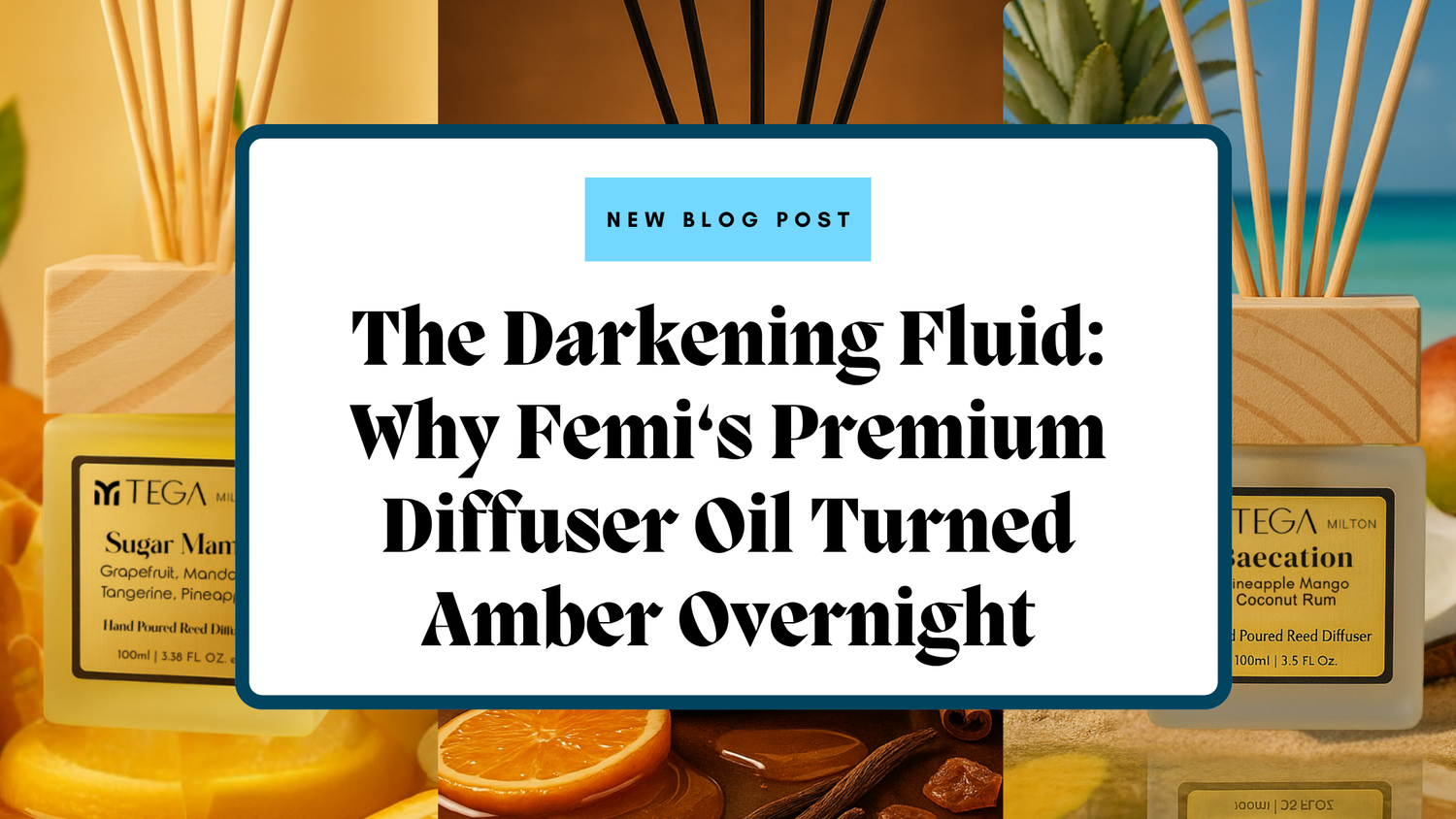
Does the liquid change color over time?
Femi stood in his open-plan penthouse in Lekki Phase 1, the mid-afternoon sun pouring beautifully through his floor-to-ceiling windows. He had spent months meticulously curating this space to be his personal fortress—an elite, silent boundary against the relentless chaos of the Lagos gridlock. The marble countertops were pristine, the minimalist furniture was perfectly aligned, and sitting proudly on his media console was his brand-new Elysian Reed Diffuser.
For the first two weeks, it was pure bliss. The crisp, high-end architectural fragrance notes unfurled like a private estate the second he stepped past the threshold.
Then, Femi noticed something that made his stomach drop.
He looked closely at the premium glass jar. The once crystal-clear, pale liquid had shifted. It was noticeably darker, taking on a distinct, rich amber hue. A sharp spike of anxiety hit his chest. Did the company dilute the product? Is the oil decomposing? Have the expensive ingredients expired in the Lagos heat, turning his premium sanctuary into a toxic hazard?
Femi felt an instant wave of frustration, convinced he had been scammed by another high-end brand masking cheap ingredients behind luxury packaging.
Before you panic like Femi, write an angry review, or throw your expensive home fragrance straight into the bin, take a deep breath. Let’s talk about the invisible science behind luxury formulation, why your oil is changing color, and why this "disappearing clarity" is actually proof of a premium product.
The Short Answer: Yes, and It’s Completely Normal
If you are staring at your bottle wondering, "Does the liquid change color over time?" the answer is a definitive yes.
The Hard Truth: Exposure to oxygen and natural sunlight can cause premium fragrance oils, especially those formulated with rich vanilla, warm gourmand, or vibrant citrus notes, to darken slightly over time.
Crucially, this color shift does not ruin the scent profile, degrade the throw, or mean your product has gone bad. It is a natural chemical evolution, not a product failure.

The Chemistry of Luxury: Why Clear Fluid Goes Dark
When a diffuser liquid changes color, our defensive instinct is to assume the brand filled the bottle with cheap alcohol, water, or unstable synthetics. However, the reality is exactly the opposite.
Premium home fragrances are complex chemical living structures. True luxury brands use sophisticated, eco-friendly, non-hazardous bases engineered specifically to hold onto raw, natural fragrance oils. Two primary environmental catalysts trigger the color transformation inside Femi’s Lekki penthouse:
1. The Oxygen Factor (Oxidation)
The moment you open your brand-new diffuser bottle and insert your fibre reeds, oxygen enters the container. This kicks off a natural process called oxidation. When the complex molecules in raw fragrance notes interact with oxygen, their chemical bonds shift slightly, which alters how they reflect light. This is particularly true for formulations containing vanilla (the organic compound that gives vanilla its creamy, addictive warmth) or deep amber accords.
2. The Sunlight Trap (UV Exposure)
Femi loved his bright, sunlit aesthetic, but placing a diffuser in the direct path of harsh Nigerian UV rays acts as an environmental accelerator. Natural sunlight warms the glass jar and excites the liquid molecules. While a premium base is engineered to withstand this without breaking down the actual scent throw, the UV exposure will rapidly deepen the color tones of the oil, shifting it from clear to golden or golden to deep amber.
Rest Easy: Your Scent Profile is Perfectly Safe
The most common fear is that a darker oil means a ruined fragrance. Rest assured, the microscopic channels inside your high-quality fibre reeds will continue to draw the luxury oil upward via capillary action exactly the same way. The evaporation rate remains steady, and the scent notes will still disperse evenly across your room.
The color change is purely cosmetic. It is simply the visual signature of raw, complex ingredients reacting naturally to the world around them.
Strategic Layout Layout: How to Manage the Shift
While you cannot stop oxidation entirely once a bottle is opened, you can easily control how quickly the color darkens by being strategic with your home layout:
-
Move Away from the Glass: Keep your diffusers away from direct window ledges where the midday sun beats down the hardest. Opt for floating shelves, entryway consoles, or coffee tables that receive indirect airflow and ambient light.
-
Keep it Cool: Avoid placing your fragrance masterpieces directly on top of electronics or media consoles that emit low-level ambient heat, as this speeds up the oxidation process.
-
Rotate Your Masterpieces Wisely: If you love rich, sweet, and comforting profiles like Sugar Mama or the elite depth of Gilty Pleasure, expect them to darken faster due to their warm, intricate base notes. Position them in more shaded, tranquil zones of your home, like the master bedroom dresser or a marble bathroom countertop, to preserve their original hue for longer.
Your home should be a source of pride and absolute peace, not a source of visual anxiety. Ditch the worry, accept the natural evolution of your premium oils, and continue enjoying the uninterrupted, 24/7 sanctuary experience you actually paid for.
0 comments